
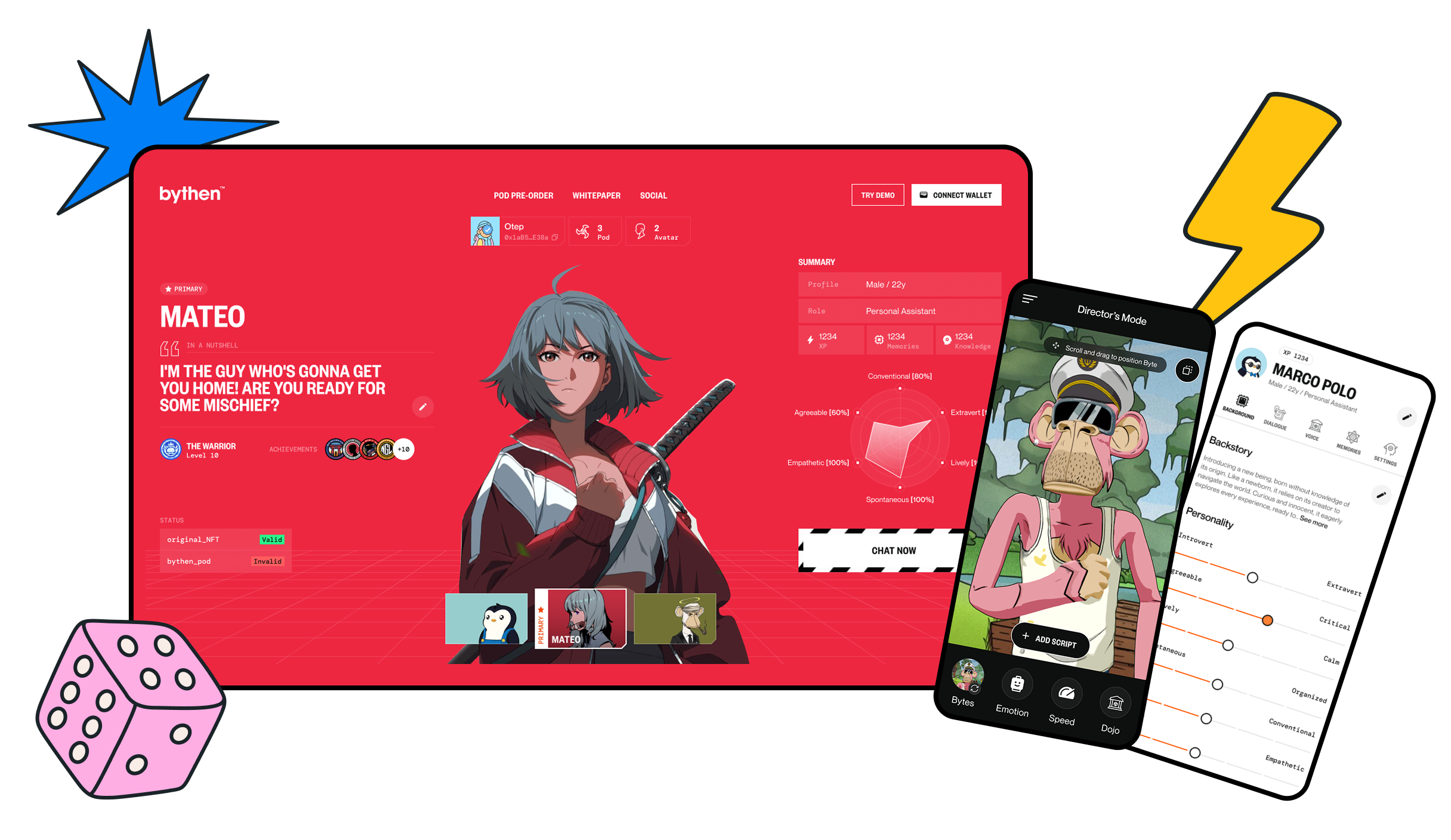
Background
As AI tools became more accessible, the barrier to creating content dropped dramatically. At the same time, the NFT market had cultivated a segment of users with high engagement and significant disposable income. Many were already using their NFTs as profile pictures, early signals that digital assets were becoming identity markers.
Bythen saw an opportunity at the intersection of these behaviors. Rather than treating NFTs purely as collectibles, the idea was to extend their utility by turning them into AI-driven digital identities capable of generating content, interacting with audiences, and unlocking new ways for holders to monetize the assets they already owned. But what would it take to transform a static NFT into a living digital avatar?
Video Courteousy of Bythen.ai
My Role
As principal UX consultant, I was brought in to help translate the vision behind Bythen into a workable product. My role focused on defining the core user experience, structuring how digital personas & avatars are created, configured, and used within the platform.
Beyond interface design, much of the work involved shaping the underlying system. I mapped the end-to-end user journey, established key interaction patterns, and worked closely with product, engineering, and business stakeholders to ensure the experience remained coherent as the product evolved.
I also guided the internal design team, helping align design decisions, maintain consistency across the product, and support the team responsible for the UI layer as we navigated a space that was still largely undefine.
The Challenges
While the opportunity was clear, turning it into a usable product introduced a number of structural challenges. NFTs were inherently static assets, while the vision for Bythen required them to behave as dynamic digital avatars capable of generating content and interacting with audiences.
Designing this meant introducing an entirely new interaction model — one that users had no prior reference for. Key challenges included:
Static Assets vs Dynamic Avatars
NFTs were designed as static digital assets, while Bythen’s vision required them to function as living avatars capable of generating content and interacting with audiences. The challenge was designing a system that could translate ownership into behavior.
Making AI-driven Creation Process Feel Intuitive
Working with AI introduces an entirely new type of behaviour compared to traditional tools. Instead of directly controlling the output, users configure inputs and refine generated results. The challenge was introducing this new workflow without losing the familiarity of traditional content creation.
Designing Around Evolving AI Capabilities
The underlying technology was evolving rapidly, with new capabilities and constraints emerging throughout development. The experience needed to remain flexible while still providing a clear and stable structure for users.
Connecting Identity, Content, and Monetization
The platform was not only about creating avatars. It also needed to support content production and potential monetization. The challenge was designing a system where identity, creation, and value generation could function as a cohesive loop.
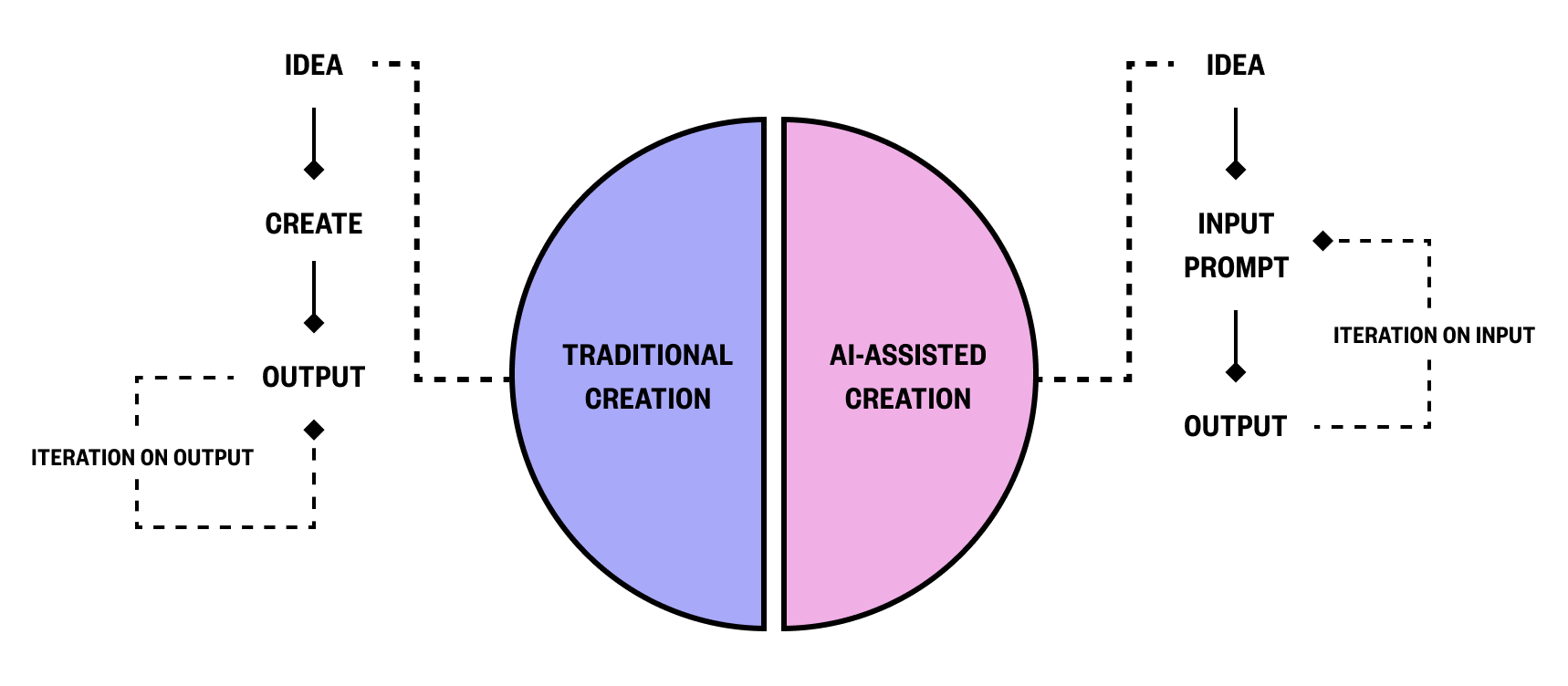
Traditional VS Gen-AI Content Creation
Research & Discovery
To gather early insights, we conducted a SurveyMonkey study with over 500 members of the Bythen community, many of whom were active participants in the NFT ecosystem. The responses confirmed that many users were already treating their NFTs as identity markers, commonly using them as profile pictures across social platforms to signal belonging and ownership within their communities.
Beyond the survey, we explored the wider ecosystem around AI tools, creator workflows, and NFT culture. This involved understanding how creators currently produce and distribute content, how emerging AI tools were changing those workflows, and where existing products were falling short.
At the same time, we worked closely with the engineering team to understand the capabilities and limitations of the underlying AI systems. Many interaction patterns had no clear precedent, which meant the product would need to introduce new behaviors while still feeling grounded in familiar creator tools.
These insights helped frame the problem space and informed how the avatar system would ultimately be structured.
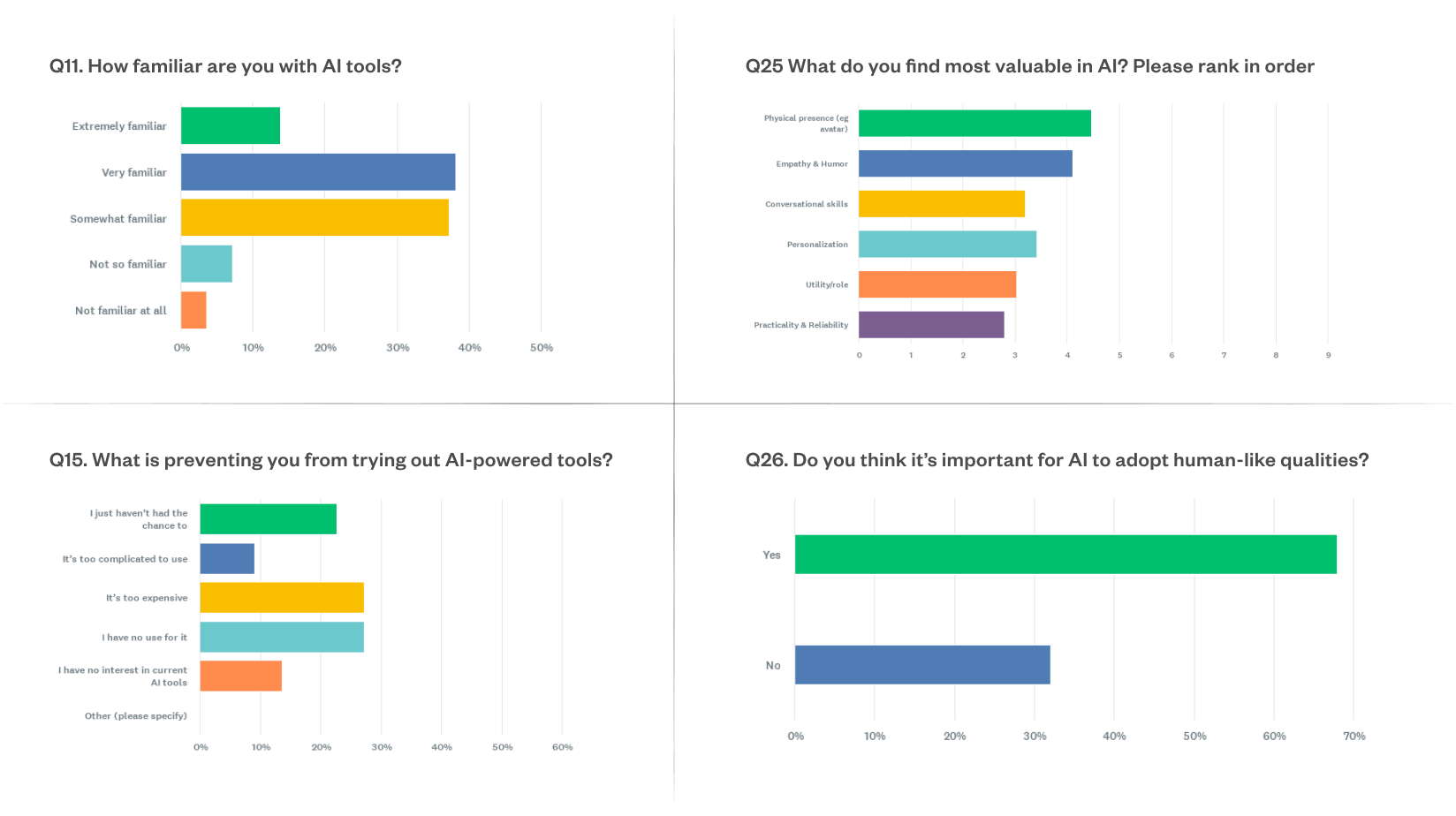
Early research with 500+ community members helped validate familiarity with AI tools, barriers to adoption, and interest in more human-like AI interactions.
Bythen System Architecture
With the research and problem space defined, my next focus was determining how AI-driven avatars would actually function within the product. The concept itself was relatively open-ended, so a large part of the work involved translating that idea into a system that could support real user behavior.
Rather than starting with screens, I began by mapping the underlying product architecture. This involved identifying the key components required to bring an avatar to life and defining how those components interact across the platform.
Through a series of system maps and user flows, we broke the experience down into four core pillars: Character Customization, Content Creation, Monetization, and Gamification.
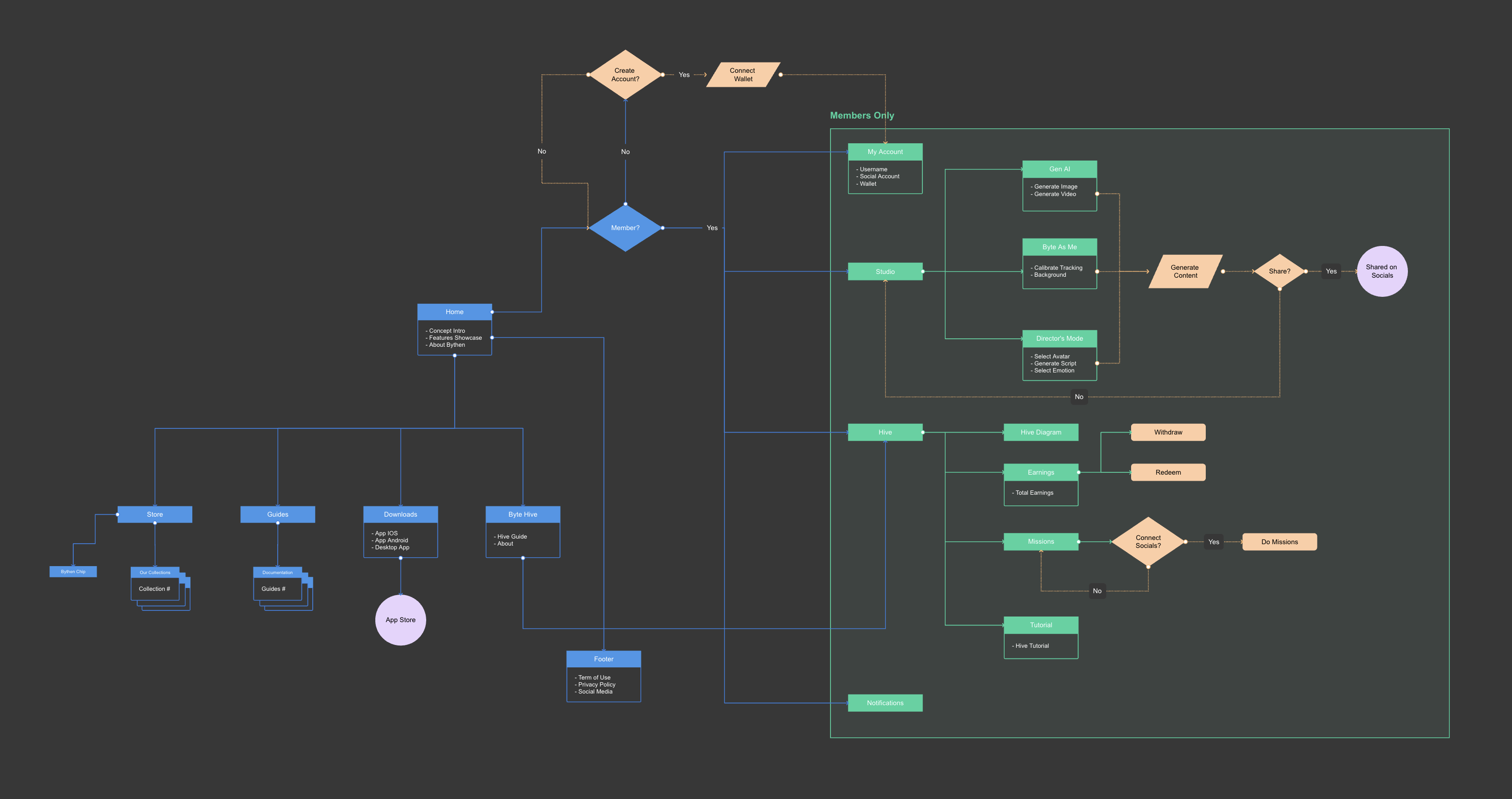
Early IA Design for Bythen's Website
Enabling Content Creation
Once the avatar system was defined, the next challenge was enabling users to actually do something meaningful with their characters. The product needed to move beyond identity configuration and support creative workflows where avatar personas could generate content and interact with audiences.
To support this, I worked with the team to design bythen Studio, a set of tools that allow users to create and perform content using their avatars. The goal was to make the process feel familiar to creators while still leveraging the capabilities of AI.
Studio introduced several ways for users to activate their avatars. Through Gen AI, users could generate images and videos featuring their character. Byte As Me allowed users to appear as their avatar during online meetings or livestreams using facial tracking. And Director’s Mode provided a way to script scenes and control the avatar's gestures and emotions.
Designing these tools required balancing creative freedom with structure. The interface needed to make AI-assisted content creation approachable while still giving users enough control over how their characters behave on screen.
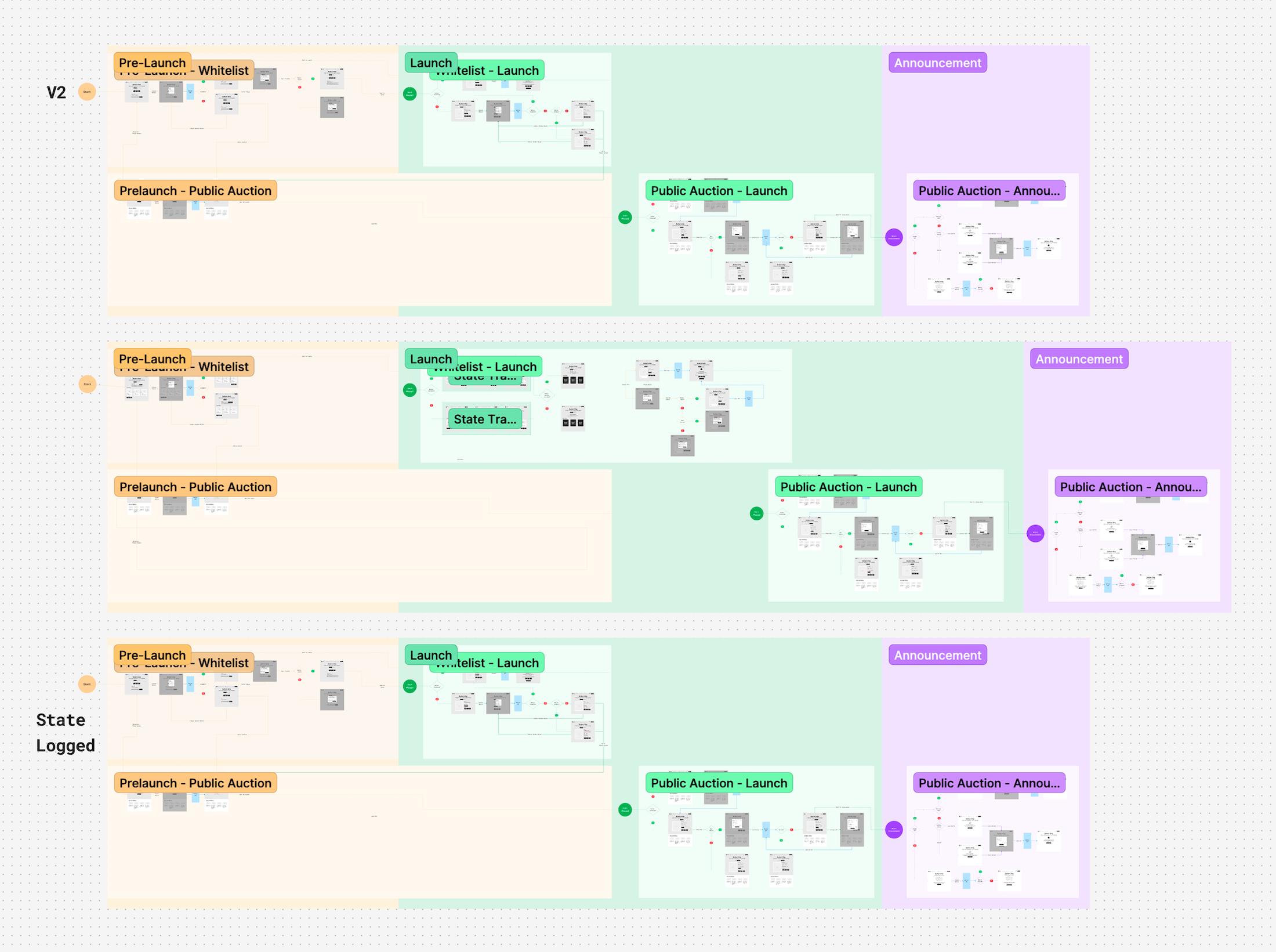
Launch States User Flow
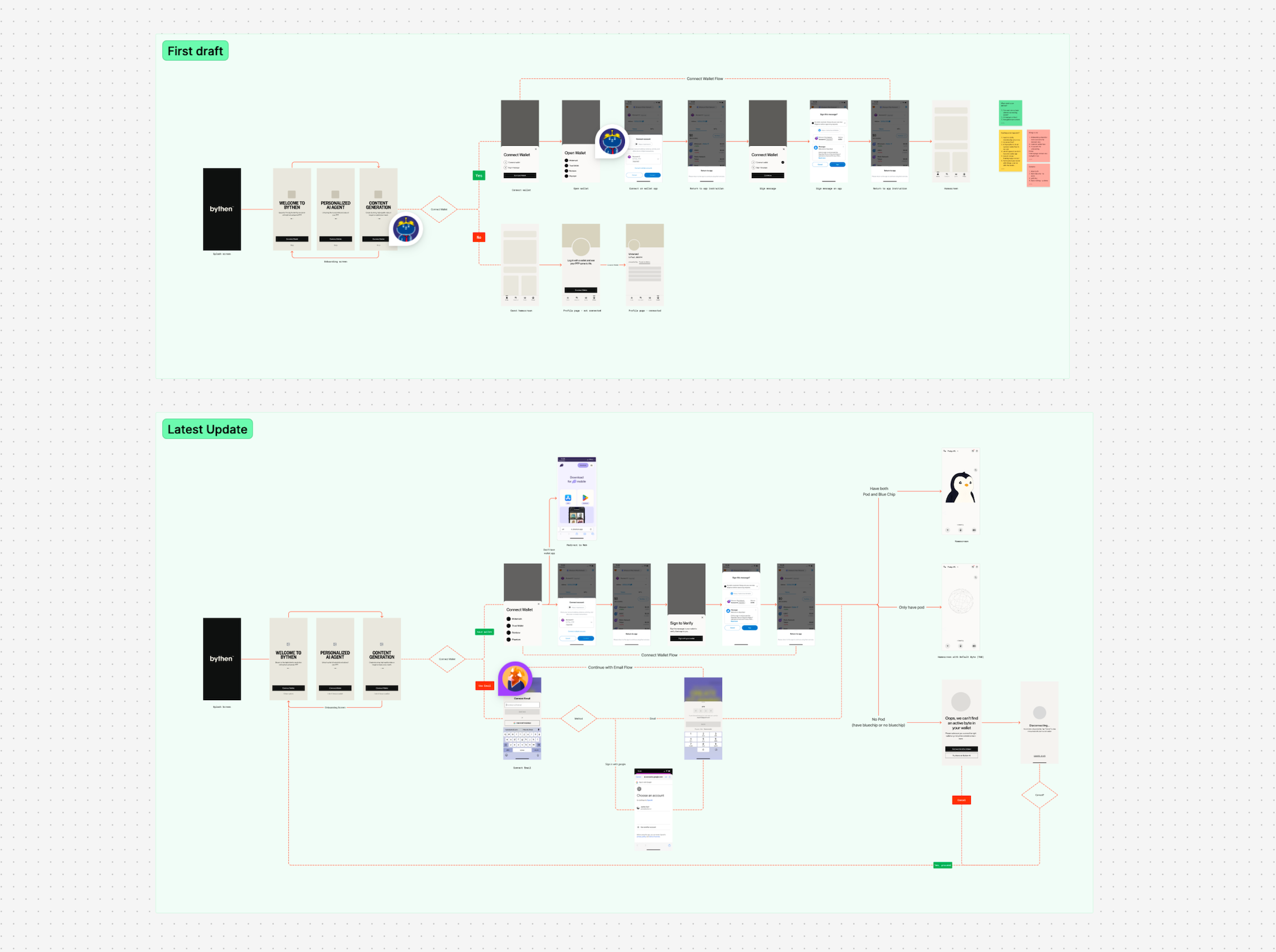
Mobile App Onboarding Flow
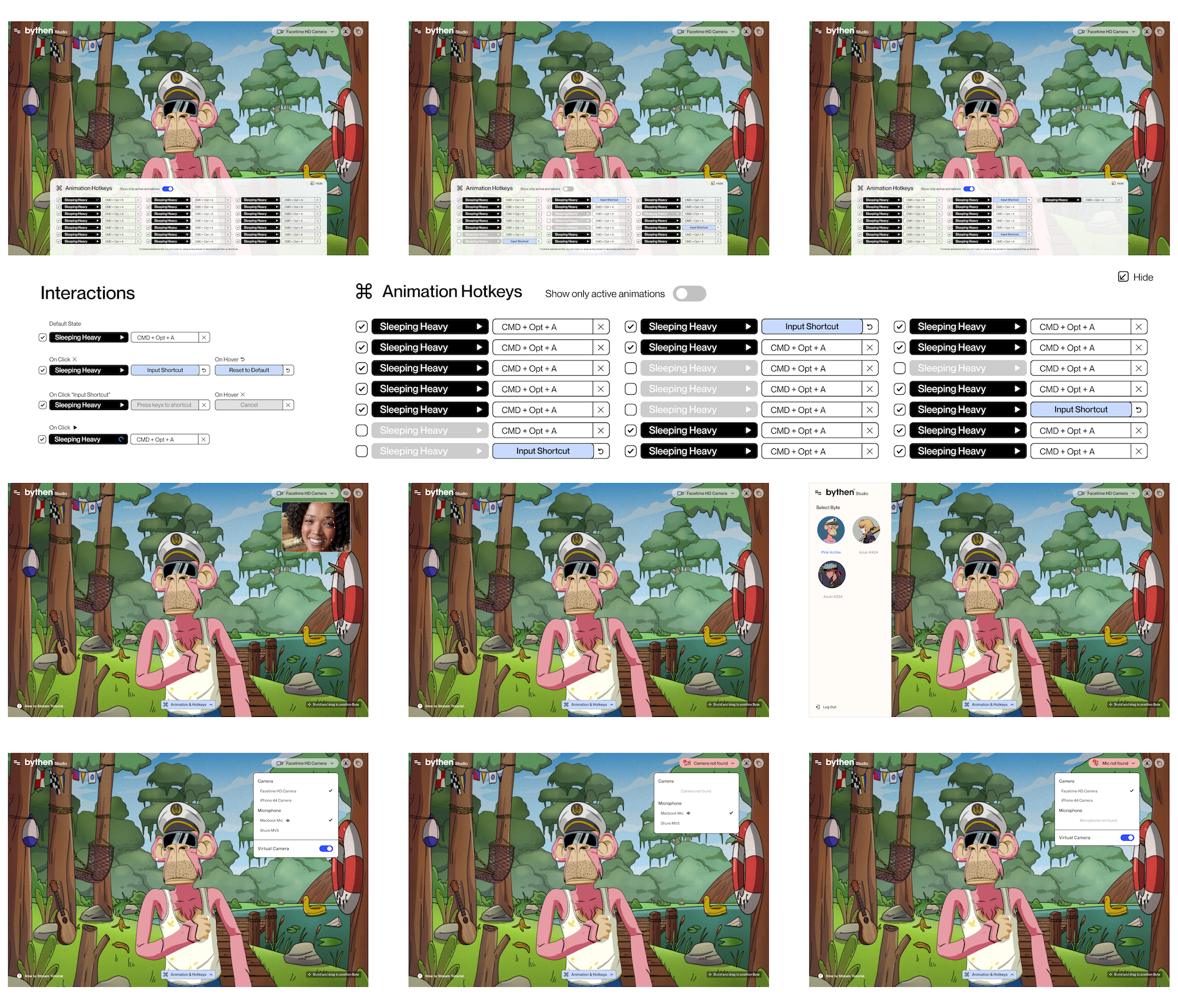
Byte As Me Interaction Design
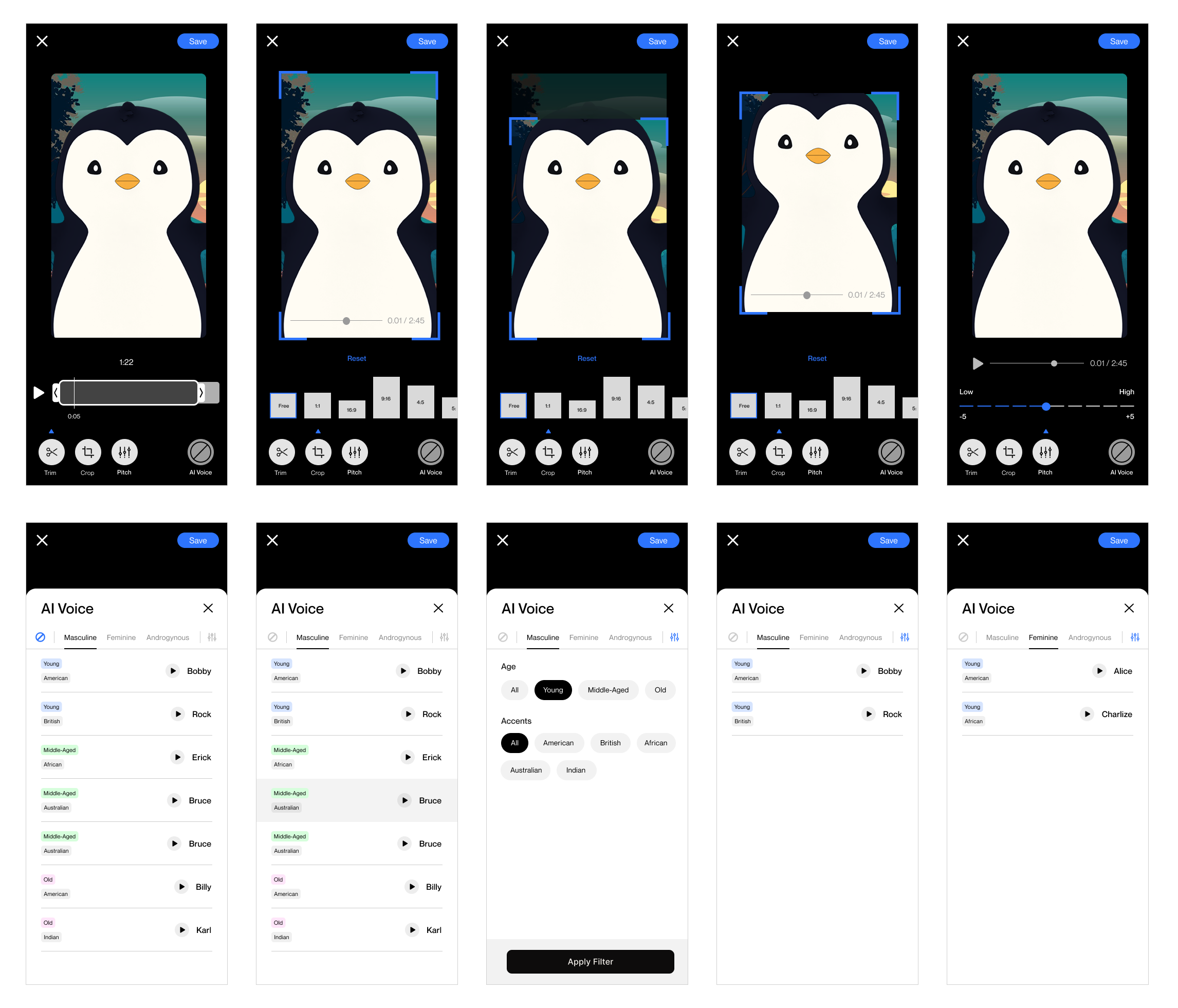
Director's Mode Flow Wireframes
Monetization & Engagement
Beyond content creation, the platform also needed mechanisms that encourage participation and reward active users. These elements formed the outer layer of the system, connecting avatars and content production to the broader ecosystem.
On the monetization side, the platform introduced incentives for chip holders through token allocations, airdrops, and affiliate programs designed to grow the community. In parallel, I helped design the UX for several in-platform campaigns and activities that allowed users to earn rewards, gain whitelist access, or win NFTs through participation.
Together, these mechanisms created an engagement loop where creating content, interacting with the platform, and participating in campaigns reinforced each other.
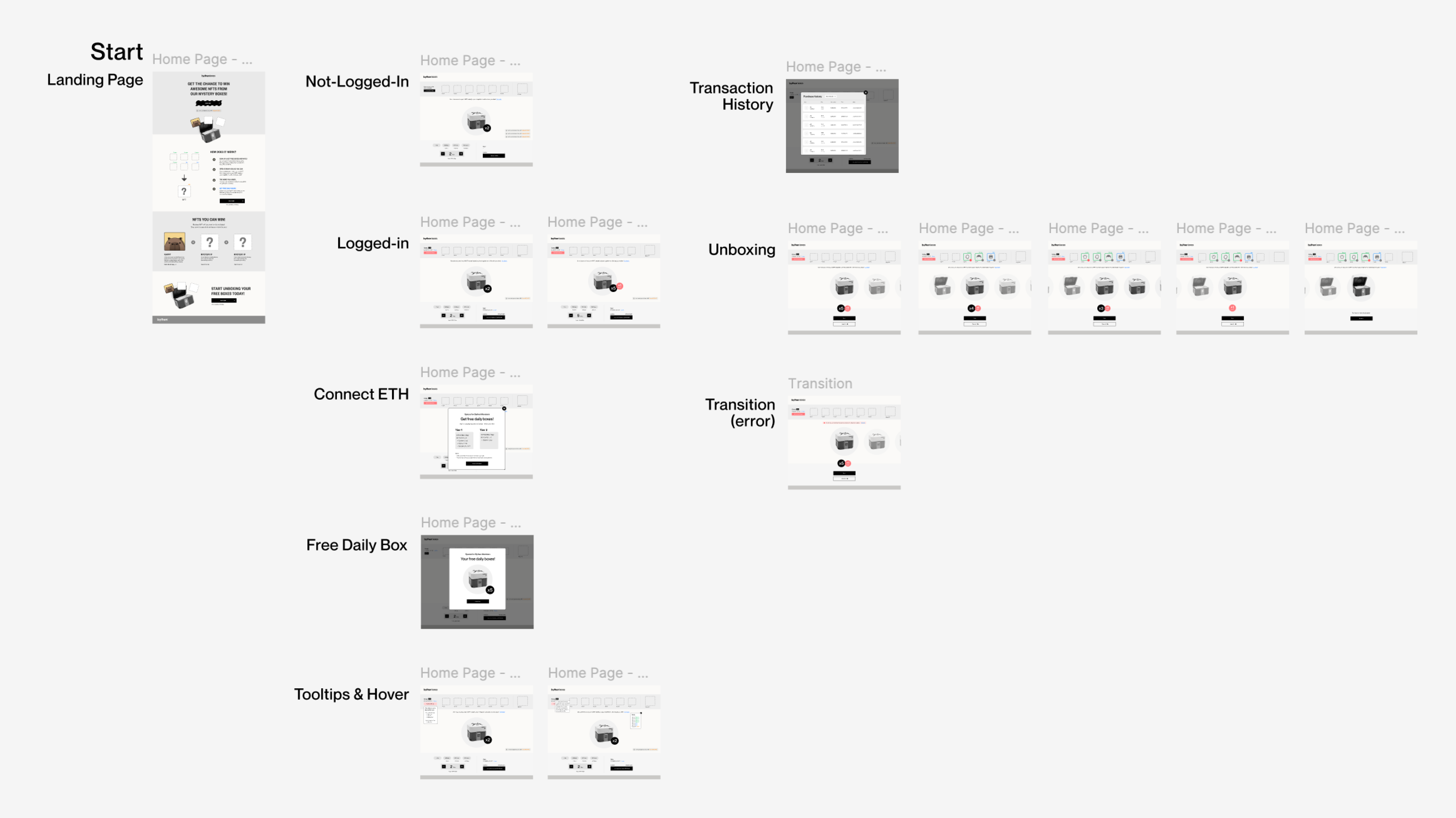
Gacha Campaign Wireframe Flow
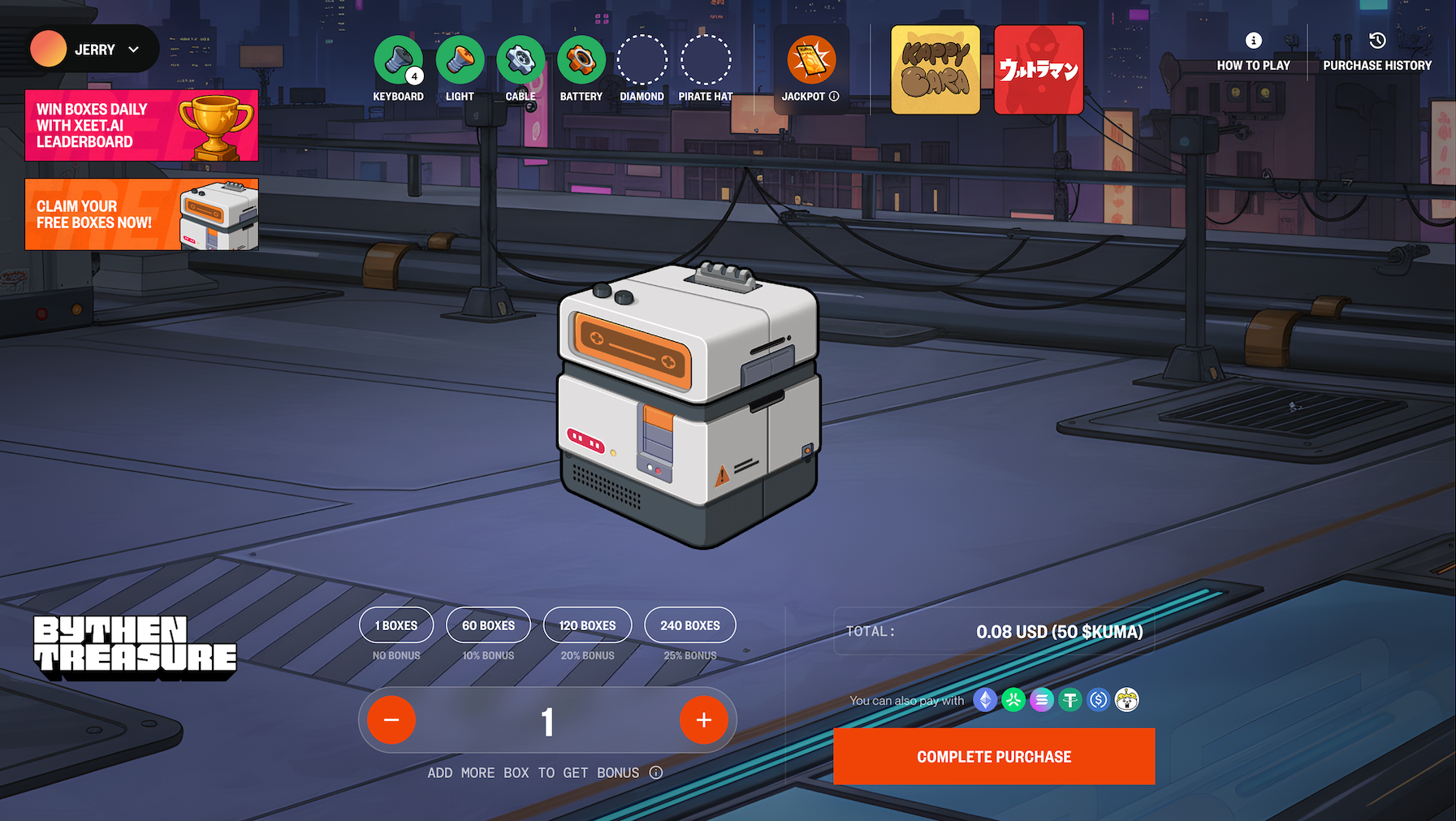
Gacha Campaign UI
Project Impact
The work I did ultimately helped establish the foundation of Bythen’s flagship product. By structuring the avatar system and defining how its different components connect, we were able to translate an early concept into a functioning platform where users could bring their NFTs to life, create content with their characters, and participate in the broader ecosystem.
Defined the foundational UX architecture for Bythen’s flagship product
Translated an early concept into a structured product experience spanning avatar creation, content tools, and platform engagement
Designed the core avatar workflow that connects identity, AI behavior, and content creation.
Guided the internal design team to maintain consistency while exploring a new product space.
Supported cross-functional collaboration between product, engineering, and business teams during early product development.
Key Learnings
Chat as an interface
Working on Bythen made me realize how different conversational interfaces are from traditional UI. Interactions unfold over time rather than through fixed screens, which forces you to think more about context, memory, and how the system guides users through a conversation.
Designing for AI-assisted workflows
Designing with AI also changed how I think about creative tools. Instead of directly controlling outputs, users guide systems through prompts, parameters, and iteration. A large part of the UX challenge becomes helping users understand how to steer the system and refine results.
Designing in ambiguous spaces
Because the product space was still evolving, many problems didn’t have established patterns or precedents. This reinforced how much design can shape the product itself, not just the interface, by helping teams frame problems, organize ideas, and turn experimentation into something usable.
User goals remain the constant
While the tools and technologies may evolve, the fundamentals of UX remain the same. Focusing on what users are trying to accomplish helps cut through the complexity and provides a stable anchor when designing for new and rapidly changing systems.
Final Note
This case study highlights selected work from my collaboration with Bythen in 2024–2025. Given the scope of the product and the ongoing development at the time, not all initiatives and design artifacts are shown. This was a collaborative effort across design, engineering, and product. I’m grateful for the chance to work with a talented team who were willing to explore new ideas and push the boundaries of what digital identity could become.
If you're curious to learn more about the platform, you can visit bythen.ai